

What the CPRA requires
- Meet every CCPA requirement, as amended by the CPRA.
- Show a “Limit the Use of My Sensitive Personal Information” link, or an allowed alternative, if you use or disclose sensitive personal information for purposes beyond those the rules permit.
- Honour requests to correct inaccurate personal information.
- Implement data minimisation and purpose limitation principles.
- Sign contracts with the terms the law requires with service providers, contractors and any third party you sell or share personal information with.
- Carry out a risk assessment before starting processing that poses a significant risk to privacy, such as selling or sharing personal information or processing sensitive personal information. Processing already running on 1 January 2026 must be assessed by 31 December 2027.
How GrantCookie covers it
- Scheduled scans. The scanner finds the cookies and trackers your site sets, sorts them into categories and re-checks on every scheduled scan, so the banner asks about what is really there.
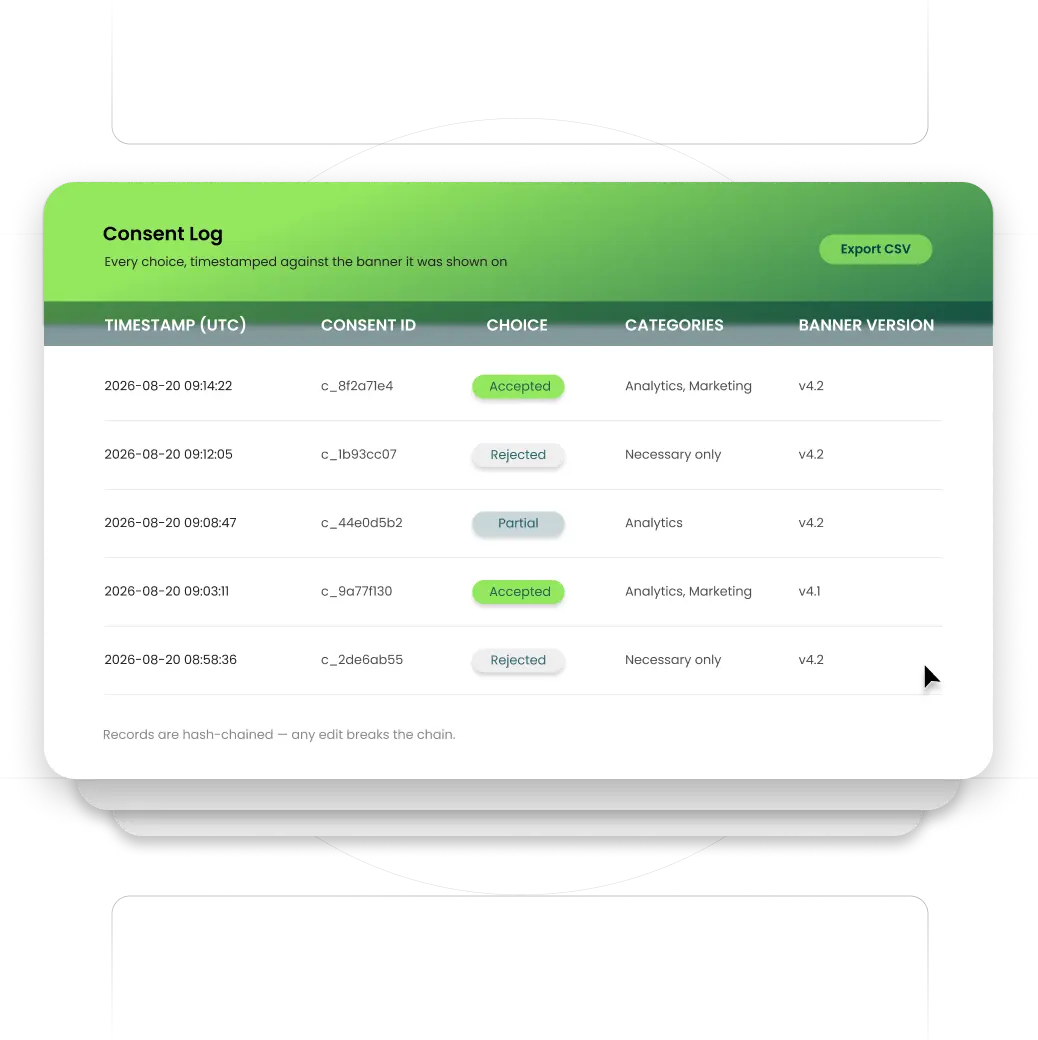
- Provable records. Every choice is timestamped and stored with the banner version the visitor saw. Paid plans include consent log export.
- Opting out later. The opt-out link and preference centre are always available, so visitors can opt out or change an earlier choice at any time.
This page is general guidance. It is not legal advice. Check your specific obligations with a qualified adviser.